Symptoms of Complex PTSD: 17 Patterns, Physical Signs, and Next Steps
Symptoms of complex PTSD can feel confusing because they often touch several parts of life at once: emotions, sleep, body tension, relationships, self-worth, and the sense of being safe. An online article cannot tell you what you have, but it can help you name patterns and decide what support may be worth exploring. If you want a private way to organize what you notice, CPTSDTest.com offers a private C-PTSD screening tool for educational self-reflection, not a replacement for a qualified mental health professional.

What Complex PTSD Symptoms Usually Include
Complex PTSD is commonly described as involving core PTSD symptoms plus deeper disturbances in self-organization. In plain language, a person may have trauma reminders, avoidance, and a body that stays alert, while also struggling with emotion regulation, self-concept, and relationships.
The word "complex" matters. Many people searching for complex PTSD symptoms in adults are asking why small cues feel huge, closeness feels unsafe, shame feels automatic, or life looks functional while the inner experience feels exhausting.
Clinicians use structured criteria and a full history when evaluating trauma-related conditions. A self-check or C-PTSD quiz can be useful for reflection, but it cannot replace a careful professional assessment. The most helpful use is to notice clusters: what happens in your body, what happens in your relationships, and what happens in your view of yourself.
The 17 Symptoms of Complex PTSD People Often Search For
There is no single universal "17 symptoms" checklist that applies perfectly to everyone. Still, many educational resources group complex PTSD experiences into a practical list. The 17 patterns below are best read as signposts, not proof.
1. Intrusive memories or flashbacks
Trauma reminders may arrive as images, sensations, emotions, or body reactions. Some people have classic flashbacks; others have emotional flashbacks where the feeling returns without a clear visual memory.
2. Nightmares or disturbed sleep
Sleep may feel light, restless, or unsafe. Nightmares can be directly related to trauma or simply carry themes of danger, helplessness, or being trapped.
3. Avoidance of reminders
Avoidance can mean staying away from places, people, topics, smells, sounds, or situations that bring up distress. It can also look like staying busy so there is no quiet space for memories to surface.
4. Hypervigilance
Hypervigilance is a persistent scanning for threat. A person may watch tone of voice, facial expressions, exits, conflict, or sudden changes because their nervous system learned that safety can shift quickly.
5. Strong startle responses
Unexpected noises, touch, messages, or conflict can trigger reactions that feel larger than the current moment. The body may respond before the mind has time to interpret what happened.
6. Emotional dysregulation
Emotions may rise quickly, last longer than expected, or feel difficult to settle. Anger, fear, grief, shame, or numbness may seem to take over the whole system.
7. Emotional numbness
Some people do not feel too much; they feel almost nothing. Numbness can be a protective response, especially when feeling fully present has not felt safe in the past.
8. Persistent shame or guilt
Complex trauma often affects self-blame. A person may feel damaged, responsible, or "too much" even when the harm was not their fault.
9. Negative self-concept
This can include feeling unworthy, permanently different, weak, bad, or hard to love. It is one of the symptoms that often separates complex PTSD from simpler descriptions of PTSD.
10. Difficulty trusting others
Trust may feel risky, even with kind people. Some people expect criticism, rejection, betrayal, or control because earlier relationships taught them to stay guarded.
11. Relationship instability or withdrawal
Complex PTSD symptoms can show up as pulling away, people-pleasing, conflict sensitivity, testing closeness, or feeling overwhelmed by ordinary intimacy.
12. Dissociation
Dissociation can feel like spacing out, going blank, watching yourself from a distance, losing time, or feeling unreal. It is often a nervous system response to overwhelm.
13. Chronic anxiety or dread
The body may carry a steady sense that something bad is coming. This may happen even when daily life appears calm.
14. Depression-like symptoms
Low motivation, hopelessness, fatigue, isolation, and loss of interest can overlap with trauma responses. This is one reason professional support matters when symptoms are persistent.
15. Physical symptoms of complex PTSD
Physical symptoms of complex PTSD may include muscle tension, headaches, digestive upset, chest tightness, sleep disruption, fatigue, or feeling wired and depleted at the same time. These symptoms can have many causes, so ongoing or severe physical concerns should be discussed with a medical professional.
16. Difficulty with identity or purpose
Some people feel unsure who they are outside survival roles. Choices, preferences, boundaries, and future plans may feel blurry.
17. Feeling trapped in survival responses
Fight, flight, freeze, and fawn are common ways people describe trauma responses. They are not a complete clinical system, but they can help people notice whether they tend to argue, escape, shut down, or appease when threatened.
What High-Functioning Complex PTSD Can Look Like
High-functioning complex PTSD is not a formal label, but it describes a familiar pattern: someone appears capable, productive, helpful, or composed while privately managing intense symptoms. They may seem calm in public, then collapse into exhaustion, numbness, irritability, or self-criticism afterward.
Common signs include over-preparing, apologizing often, needing control to feel safe, reading every shift in someone else's mood, avoiding rest, and feeling responsible for preventing conflict. A person may be praised for being reliable while feeling internally unsafe much of the time.
This is also where a structured C-PTSD symptom check can be useful. Grouping symptoms may help someone separate "I am failing" from "my nervous system may be responding to old threat patterns."
Symptoms of Complex PTSD in Women
Symptoms of complex PTSD in women can be shaped by social expectations, caregiving roles, safety concerns, and the way distress is interpreted by others. Some women may internalize symptoms as anxiety, depression, perfectionism, shame, or relationship difficulty. Others may be told they are too sensitive, dramatic, detached, or angry when their reactions are connected to trauma history.
Gender does not determine how complex PTSD appears. Men, women, and nonbinary people can all experience emotional dysregulation, avoidance, dissociation, mistrust, and body-based stress. Still, women may be more likely to search for answers after years of minimizing their own needs or trying to keep relationships stable at personal cost.
A trauma-informed lens asks gentler questions: What helps this person feel safe? What patterns repeat under stress? What boundaries were never allowed? What symptoms worsen after contact, conflict, or reminders?
Complex PTSD Causes and Risk Factors
Complex PTSD causes are usually linked with prolonged, repeated, or inescapable trauma. Examples can include childhood abuse or neglect, long-term domestic abuse, coercive control, trafficking, captivity, repeated community violence, war-related trauma, or ongoing relational harm.
Not everyone who experiences trauma develops complex PTSD. Risk can be influenced by age, duration, relationship to the person causing harm, lack of escape, previous trauma, and whether others believed or protected the person. Protective factors can include safe relationships, trauma-informed care, stable housing, and time away from ongoing harm.
It is important not to use causes as a gatekeeping list. Some people minimize what happened because it was emotional rather than physical, because it happened inside a family, or because they were repeatedly told it was normal. If symptoms are affecting daily life, support is worth considering even when someone is unsure whether their experience "counts."
The Worst Things to Do to Someone With Complex PTSD
The worst thing to do to someone with complex PTSD is usually to remove choice. Pressure, blame, disbelief, forced disclosure, sudden confrontation, threats of abandonment, or mocking their reactions can intensify survival responses.
More supportive responses are often simple: ask before touching, give time to answer, keep plans predictable when possible, avoid using trauma details as arguments, and respect boundaries without demanding a full explanation. If the person is overwhelmed, a calm tone and clear choices often help more than long advice.
Support does not mean tolerating harmful behavior. It means holding limits without humiliation. You can say, "I care about you, and I need this conversation to pause until we can both speak safely." That protects both people.

Can Complex PTSD Symptoms Improve?
Many people with complex PTSD symptoms do improve with appropriate support, time, and safer conditions. Progress may not mean forgetting what happened or never being triggered. It may mean recognizing patterns earlier, recovering more quickly after activation, building relationships with better boundaries, and feeling less ruled by shame.
Professional treatment may include trauma-focused therapy, skills for emotion regulation, EMDR, cognitive processing approaches, somatic or body-based support, group support, and care for anxiety, depression, sleep, or substance use concerns when present. The right path depends on the person, their history, their current safety, and their readiness.
Self-help can support recovery, but it should not become another pressure project. Gentle tracking, grounding skills, safe movement, sleep routines, supportive relationships, and crisis planning can all matter. If symptoms feel unmanageable, if safety is uncertain, or if there are thoughts of self-harm, urgent professional or crisis support is important.
A Gentle Way to Reflect on Your Next Step
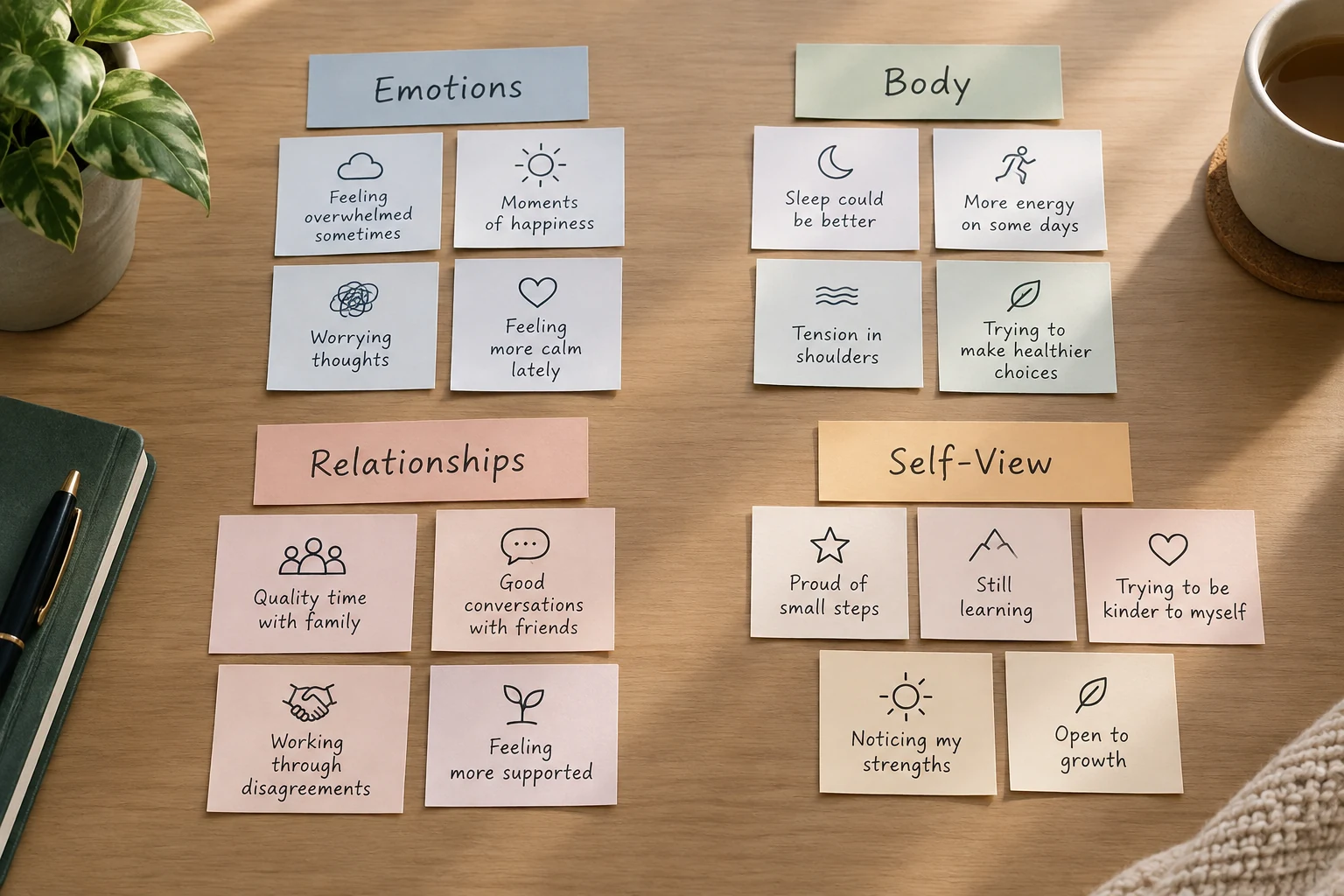
If several symptoms of complex PTSD feel familiar, try organizing what you notice into three columns: body, relationships, and self-view. Under body, list sleep, tension, startle, digestive changes, fatigue, or numbness. Under relationships, list trust, boundaries, conflict, closeness, and isolation. Under self-view, list shame, guilt, worth, identity, and hope.
Then ask two low-pressure questions: Which pattern affects my daily life the most right now? What kind of support would make the next week slightly safer or clearer?
You do not have to decide everything at once. You might bring notes to a therapist, talk with a trusted person, read more about trauma responses, or use a gentle C-PTSD self-reflection starting point to organize your thoughts before seeking additional support.
FAQ
How can you tell if someone has complex PTSD?
You cannot know for certain from the outside. You may notice patterns such as hypervigilance, avoidance, emotional swings, numbness, shame, distrust, or relationship difficulty, especially after long-term trauma. A qualified professional can provide a full clinical evaluation.
What does high-functioning complex PTSD look like?
It can look like competence on the outside and survival mode on the inside. A person may work, care for others, and seem composed while privately dealing with anxiety, shame, sleep problems, emotional flashbacks, or exhaustion.
What are the four F's of CPTSD?
The four F's usually refer to fight, flight, freeze, and fawn. They describe common survival responses: confronting, escaping, shutting down, or appeasing. They can be useful for self-understanding, but they are not the whole picture of complex PTSD.
What does CPTSD look like in a woman?
It may look like anxiety, depression, perfectionism, people-pleasing, emotional numbness, relationship fear, shame, or strong reactions to conflict. Women can also show anger, withdrawal, dissociation, or physical stress symptoms. The pattern varies by person.
Are physical symptoms of complex PTSD real?
Yes, trauma-related stress can be felt in the body. Sleep disruption, muscle tension, headaches, digestive distress, fatigue, and feeling constantly alert are common reports. Because physical symptoms can have many causes, medical care is important when symptoms are new, severe, or persistent.
Is a C-PTSD quiz enough to know what is happening?
No. A quiz can help you reflect on symptom patterns and prepare notes, but it cannot replace a professional assessment. Use it as an educational starting point rather than a final answer.
Can people recover from complex PTSD?
Many people experience meaningful improvement with trauma-informed support, safer relationships, and time. Recovery is often gradual. It may involve fewer triggers, better boundaries, more self-compassion, and a stronger ability to return to the present after distress.