Psychological Trauma Explained: Symptoms, Types, and Gentle Next Steps
Psychological trauma is the lasting mental, emotional, and body-based stress response that can follow an overwhelming event or a pattern of harmful experiences. It is not a weakness, a character flaw, or proof that a person is broken. Trauma is better understood as the mind and nervous system trying to protect someone after something felt unsafe, inescapable, or too much to process at the time. If you are trying to make sense of trauma-related patterns, a private C-PTSD self-reflection tool can offer a structured starting point while you consider whether professional support would also be helpful.

What Psychological Trauma Means
The psychological trauma definition is not limited to one type of event. A person may be affected by a single frightening incident, a long period of neglect, repeated relationship harm, a serious accident, violence, sudden loss, or exposure to someone else's traumatic experience. What makes an experience traumatic is not only what happened, but how the person experienced it, what support was available afterward, and whether the body and mind were able to return to a felt sense of safety.
In trauma psychology, the same event can affect two people differently. One person may feel shaken for a few days and gradually settle. Another may keep re-living the experience, feel emotionally numb, avoid reminders, or find that trust, sleep, concentration, or self-worth has changed. Both responses deserve respect. Trauma is not a contest about whose experience was "bad enough."
The word is usually pronounced sy-kuh-LAH-juh-kuhl TRAW-muh. In everyday speech, many people use psychological trauma and emotional trauma almost interchangeably, but there is a useful distinction. Emotional trauma often points to feelings such as fear, grief, shame, or abandonment. Psychological trauma is a broader phrase that can include emotions, beliefs, memory, attention, body alarm, relationships, and identity.
Psychological Trauma Symptoms Adults May Notice
Psychological trauma symptoms can appear quickly, slowly, or only when something in daily life brings the past close again. Symptoms also change over time. Some people mainly notice body alarm. Others notice mood changes, relationship patterns, or a sense that they are watching life from a distance.
Common signs of psychological trauma include intrusive memories, nightmares, sudden waves of fear, emotional numbness, irritability, sleep problems, difficulty concentrating, feeling on edge, avoiding reminders, guilt, shame, and trouble trusting others. Some adults also describe physical tension, stomach discomfort, headaches, fatigue, or a racing heart when nothing obviously dangerous is happening.

Here is a simple way to group the signs of emotional trauma in adults:
- Body alarm: jumpiness, muscle tension, fast heartbeat, shallow breathing, disrupted sleep, or feeling constantly prepared for danger.
- Memory and attention changes: unwanted reminders, flashback-like moments, fogginess, trouble focusing, or losing track of time under stress.
- Mood and self-view changes: sadness, anger, shame, guilt, emotional swings, numbness, or feeling unlike yourself.
- Relationship changes: pulling away, people-pleasing, fear of conflict, difficulty setting boundaries, or expecting rejection.
- Avoidance and narrowing: avoiding places, topics, people, sensations, or decisions that seem connected to the trauma.
These signs do not prove a specific condition. They are signals that the nervous system may still be carrying the weight of an overwhelming experience. If symptoms feel intense, persistent, or disruptive, a trauma-informed mental health professional can help you understand what may be happening and what support fits your situation.
Types of Psychological Trauma
There are many types of psychological trauma, and the categories often overlap. The point of naming them is not to label a person, but to clarify what kind of support and pacing may be needed.
Acute trauma usually refers to a single event, such as an accident, assault, medical emergency, natural disaster, or sudden loss. The event may be short, but the aftereffects can still be strong.
Chronic trauma involves repeated or ongoing exposure, such as long-term bullying, repeated threats, unsafe caregiving, domestic violence, or persistent instability. The body may learn to stay alert because the stressor keeps returning.
Complex or developmental trauma often involves repeated harm in close relationships, especially during childhood or in situations where escape was difficult. This can shape emotional regulation, self-image, boundaries, and trust. For people exploring long-term trauma-related patterns, a structured trauma-related symptom check-in may help organize observations before speaking with a professional.
Secondary or vicarious trauma can affect caregivers, first responders, therapists, journalists, family members, or anyone repeatedly exposed to the suffering of others. The person may not have directly experienced the original event, but their nervous system still responds to the repeated exposure.
Collective or community trauma can follow war, displacement, discrimination, mass violence, disaster, or shared loss. In these cases, healing often requires both individual support and community-level safety, dignity, and connection.
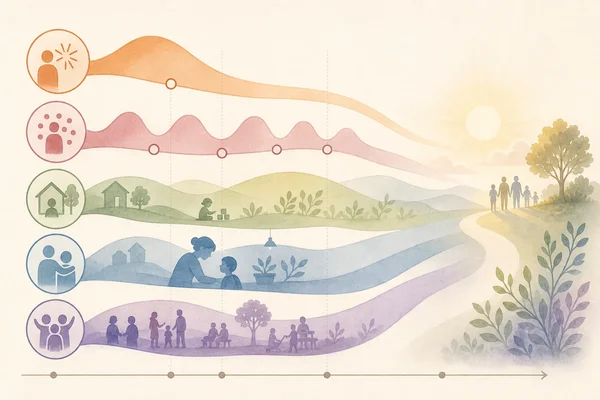
Psychological Trauma vs Emotional Trauma
The comparison "psychological trauma vs emotional trauma" can be confusing because the two phrases are closely related. Emotional trauma usually highlights the felt emotional wound: fear, grief, betrayal, humiliation, helplessness, or loss. Psychological trauma highlights the wider impact on mental processes and daily functioning, including memory, beliefs, threat perception, sleep, relationships, and the ability to feel present.
For example, a person who was humiliated repeatedly in a relationship may feel emotional pain when they remember it. Psychologically, they may also begin to expect criticism, avoid closeness, scan for signs of anger, or believe they are difficult to love. The emotional injury and the psychological adaptation are connected.
This difference matters because recovery is rarely only about "feeling better." Many people also need to rebuild safety cues, understand triggers, practice boundaries, restore choice, and make sense of beliefs that formed under pressure. Trauma-informed care often moves slowly for that reason. The goal is not to force a person to tell every detail, but to help the nervous system learn that the present can be different from the past.
How to Deal With Psychological Trauma Gently
Dealing with psychological trauma is not a single technique. It is a gradual process of increasing safety, support, and choice. Some people benefit from therapy early. Others begin by stabilizing daily routines, learning grounding skills, or finding language for what has been happening.
Start with the basics that help the body notice the present:
- Name five things you can see, four things you can feel, three sounds you can hear, two things you can smell, and one thing you can taste.
- Put both feet on the floor and slowly describe the room as if you were giving directions to someone else.
- Use a small routine after difficult moments: drink water, step outside, change lighting, stretch, or write one sentence about what you need next.
- Track patterns without judgment: What was the trigger? What did your body do? What helped even slightly?
Support also matters. A safe friend, peer group, therapist, doctor, or community resource can reduce the isolation that often surrounds trauma. If you ever feel at risk of harming yourself or someone else, or you feel unable to stay safe, contact local emergency services or a crisis support service in your area right away.
Professional support for treating psychological trauma may include trauma-focused cognitive behavioral approaches, EMDR, somatic therapies, parts-informed work, group support, medication support for related symptoms, or other approaches. The best fit depends on the person, the type of trauma, current safety, culture, preferences, and access. A good provider should explain options, move at a tolerable pace, and respect consent.
Can a Psychological Trauma Test Help?
Many people search for a psychological trauma test because they want language for experiences that feel confusing. A screening or self-reflection tool can help you notice patterns, but it should not be treated as a final answer. Trauma-related symptoms can overlap with anxiety, depression, grief, ADHD, substance use, sleep disruption, chronic stress, medical issues, and other concerns.
A careful self-check can still be useful when it helps you prepare for support. You might write down which symptoms appear most often, how long they have been present, what situations make them worse, and what helps you feel more grounded. If complex trauma or long-term relationship trauma is part of your concern, CPTSD-oriented screening can help you compare your experience with common trauma-related domains such as re-experiencing, avoidance, threat response, emotional regulation, relationship strain, and negative self-view.
The safest way to use any trauma test is as an educational mirror, not a label. Let it help you ask better questions: What patterns am I noticing? What support do I need? What would make daily life feel even a little more manageable?
A Gentle Next Step for Trauma-Related Reflection
Psychological trauma can affect memory, mood, the body, relationships, and the way a person understands themselves. But trauma responses are adaptations, not personal failures. They often formed when the mind and body were trying to survive something overwhelming.

If you are unsure what your symptoms mean, consider making a short trauma reflection note: what happened in broad terms, what reactions show up now, what feels unsafe, what helps, and who could support you. You can also explore a gentle screening and education starting point if your concerns include complex trauma patterns and you want a private way to organize your observations.
The next step does not have to be dramatic. It may be a conversation with a therapist, a safer routine after triggers, a boundary with someone who dismisses your experience, or a small practice that helps your body return to the present. Go at a pace that leaves room for choice.
FAQ
What is considered psychological trauma?
Psychological trauma is the lasting impact of an overwhelming experience or repeated harmful pattern on the mind, emotions, body, and sense of safety. It can follow violence, accidents, loss, neglect, relationship harm, medical events, disasters, or other situations where a person felt unable to cope or escape.
What is an example of a psychological trauma?
One example is a serious car accident after which a person avoids driving, has unwanted memories, sleeps poorly, and feels tense whenever they hear sudden braking. Another example is repeated childhood emotional neglect that later affects trust, self-worth, and emotional regulation.
What are four symptoms of psychological trauma?
Four common symptoms are intrusive memories, avoidance of reminders, feeling constantly on alert, and changes in mood or self-view. Other signs can include sleep problems, numbness, shame, irritability, relationship strain, or body tension.
How do you recover from psychological trauma?
Recovery often involves safety, stabilization, supportive relationships, grounding skills, and trauma-informed professional help when needed. Many people improve by moving gradually, learning their triggers, practicing body-based calming skills, and working with a provider who respects consent and pacing.
Is psychological trauma the same as PTSD?
No. Psychological trauma describes the impact of overwhelming experiences. PTSD is a specific trauma-related condition with defined symptom patterns. Some people with trauma symptoms meet PTSD criteria, some experience complex trauma patterns, and others have distress that does not fit one neat category.
Should I read a psychological trauma book?
A good psychological trauma book can help you understand symptoms and feel less alone, especially if it is trauma-informed, practical, and not fear-based. Books work best as education, not as a replacement for personal support when symptoms are severe or daily life is being affected.
What does psychological trauma research study?
Psychological trauma journal research may study memory, stress physiology, childhood adversity, treatment outcomes, resilience, social support, trauma effects on the brain, and how culture or relationships shape recovery. Research language can be technical, so it is reasonable to pair it with plain-language resources.