CPTSD Test: Understanding the 4 Trauma Responses & Healing Strategies
Have you ever wondered why you react so intensely to situations that others seem to handle calmly? If you find yourself asking "do I have CPTSD?", understanding your patterns is a crucial first step. For those with Complex Post-Traumatic Stress Disorder (CPTSD), emotional explosions, shutdowns, or people-pleasing aren't personality flaws - they're survival responses hardwired by trauma. If you're wondering whether you might benefit from a professional CPTSD test, this guide explores the four trauma responses that shape daily life for survivors, empowering you with practical strategies to reclaim control. Take our free assessment to discover how these responses manifest in your unique experience.

Fight, Flight, Freeze, and Fawn: Your CPTSD Survival Responses
Your nervous system developed these automatic reactions to protect you during prolonged trauma. Think of them as your body's security system - sometimes overly sensitive after years of threat detection. All four serve survival purposes, though they may now create challenges in safe environments.
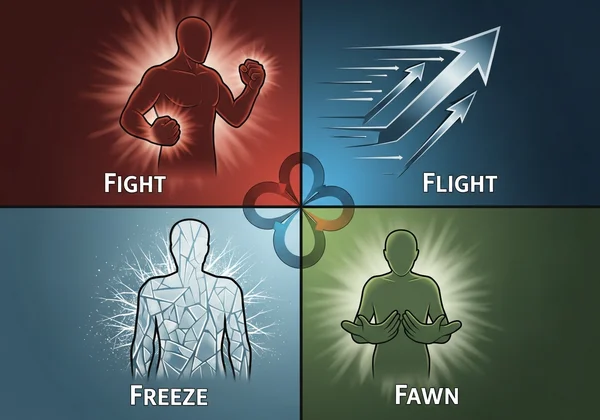
What the 'Fight' Response Looks Like in CPTSD
The fight response often manifests as sudden anger, irritability, or defensiveness. Julie, a childhood abuse survivor, describes lashing out at coworkers over minor feedback: "Any criticism feels like an attack - I'm arguing before I realize why." Physical signs include clenched jaws, rapid heartbeat, and feeling "ready to explode."
Validation matters: Your rage likely protected you when fighting back was possible. Honor that protective intent while learning new response options. Our clinically-validated test explores how fight responses impact your scoring across emotional, relational, and self-concept domains.
Understanding the 'Flight' Response: Escape and Avoidance
When facing trauma with no escape, your mind finds ways to flee internally. Flight responses include obsessive worrying (mental "running"), workaholism, or abruptly leaving relationships. Survival comes first - even if that means avoiding intimacy or numbing through substances.
James shares: "I'd schedule back-to-back meetings just to avoid being alone with my thoughts." Recognizing these patterns is the first step toward developing healthier anchors.
The 'Freeze' Response: Numbness and Dissociation Explained
Frozen terror helped ancestors play dead during predator attacks. For modern CPTSD survivors, it shows as dissociation ("zoning out"), chronic fatigue, or feeling emotionally numb. Perhaps you've described it as "I shut down" or "My brain goes offline."
Biologically, your body conserves energy for true emergencies - but constant hypervigilance exhausts this system. Gentle movement and sensory grounding can help thaw these states safely.
The 'Fawn' Response: People-Pleasing and Trauma Bonding
The fawn response develops when survival depended on appeasing abusers. It involves excessive compliance, difficulty saying no, and prioritizing others' needs while neglecting your own. As Maya explains: "I'd agree with opinions I hated just to avoid conflict - then hate myself afterward."
This isn't weakness; it's ingenious adaptation to environments where resistance meant danger. Recognizing this pattern helps reclaim agency while honoring your survival wisdom.
Recognizing Your Dominant Response Patterns in Daily Life
Most people use multiple responses depending on context, but tend toward primary and secondary patterns. The first step toward change is compassionate self-observation.
Self-Assessment: Identifying Your Primary Response Patterns
Self-reflection exercise:
- Notice physical sensations during stress (heat = fight, urge to move = flight)
- Track situations triggering disproportionate reactions
- Identify automatic behaviors (arguing, apologizing, withdrawing)
While self-reflection is powerful, taking a structured CPTSD test can provide a clearer picture of your primary and secondary patterns. When Maria took our free CPTSD assessment, she discovered her "freeze-fawn" combination: withdrawing from conflict followed by excessive apologizing. The personalized report helped her recognize these patterns' protective origins.
How Responses Shift and Change Over Time
Your dominant response may change with circumstances. Stress depletion often moves individuals from active responses (fight/flight) to passive ones (freeze/fawn). Healing allows flexible responses rather than being "stuck" in one pattern.
Note: Chronic switching between extremes may indicate unresolved trauma - our assessment measures this instability across the Core Symptoms Scale (CSS) and Symptom Severity subscales.
Evidence-Based Healing Strategies for Each Trauma Response
These clinically-backed techniques help rewire survival responses without shame. Progress isn't linear - celebrate small victories.

Trauma-Informed Therapy Approaches for Each Response
- Fight: Dialectical Behavior Therapy (DBT) for emotional regulation skills
- Flight: Exposure therapies paired with grounding techniques
- Freeze: Somatic Experiencing® to release trapped survival energy
- Fawn: Internal Family Systems (IFS) to strengthen self-advocacy parts
Consistency matters more than perfection. As therapist Dr. Lisa Moore notes: "Five minutes of daily practice creates more change than one weekly breakthrough."
Daily Practices to Regulate Your Nervous System
The key is finding what your system accepts as safety:
- Fight: Boxing classes (channel energy) / Progressive muscle relaxation
- Flight: Walking meditations / Scheduled worry time
- Freeze: Gentle yoga / Weighted blankets
- Fawn: Boundary scripts ("I need to think about that") / Self-compassion breaks
Pro Tip: Pair these with environment adjustments identified in your personalized assessment results.
Long-Term Healing: Rewiring Trauma Response Patterns
Neuroplasticity research confirms neural pathways can change at any age. Effective rewiring requires:
- Consistent safety experiences to update threat detection
- New emotional responses practiced during calm states
- Community support reinforcing positive neural networks
Consider tracking progress using our assessment's repeat-test feature - many users retest quarterly to measure symptom shifts.
Creating Your Personalized CPTSD Response Management Plan
Healing begins where self-judgment ends. These steps help build your unique roadmap.
When to Seek Professional Help for CPTSD Responses
Consider professional support if you experience:
- Safety concerns (self-harm or suicidal thoughts)
- Debilitating symptoms affecting work/relationships
- Repeated failed self-help attempts
- Desire for specialized modalities (EMDR, neurofeedback)
Non-crisis support includes guidance found in the resources provided with your assessment.
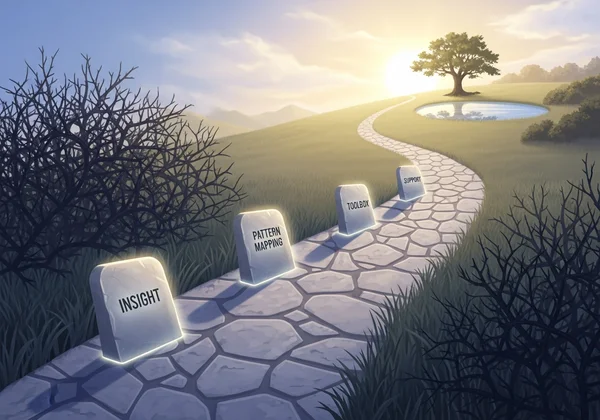
Your Personalized CPTSD Response Management Plan
- Insight: Complete your core CPTSD assessment
- Pattern Mapping: Note triggers, responses, and consequences
- Toolbox: Select 3 coping strategies matching your primary response
- Support: Identify allies/resources (therapy, support groups)
- Check-ins: Monthly self-reviews adjusting tools as needed
Sarah's plan combined therapy for freeze tendencies and daily boundary practices to reduce fawning. After six months, her assessment score decreased by 32% in avoidance behaviors.
From Survival Responses to Conscious Choices
Your trauma responses embody wisdom forged in impossible circumstances. With compassionate understanding and targeted strategies like those explored here, you can transform these automatic reactions into conscious choices.
Next steps await: ➤ Discover your primary CPTSD response patterns through our free assessment ➤ Access printable management tools with your personalized report ➤ Explore related articles on emotional flashbacks and inner child work
Healing unfolds at your pace. Every moment of self-understanding brings you closer to reclaiming your narrative.
Frequently Asked Questions About CPTSD Trauma Responses
What are the 4 F's of CPTSD and how do they affect daily life?
The fight-flight-freeze-fawn framework describes instinctive survival responses that become chronically activated after repeated trauma. They influence emotional reactions, relationship patterns, work performance, and self-perception - often creating aftereffects survivors don’t recognize as trauma-related until they take a thorough CPTSD test.
How can I tell which trauma response is most dominant in me?
Signs include consistent emotional reactions under stress (e.g., anger indicating fight), habitual behaviors (people-pleasing suggests fawn), and feedback from trusted others. Our assessment precisely measures symptom clusters tied to each response pattern through clinically validated scales.
Are these trauma responses permanent or can they change with healing?
Neuroplasticity confirms these responses can recalibrate with safety and targeted work. Many users report decreased intensity and increased response flexibility within months of implementing personalized strategies based on their test results analysis.
What's the first step in healing from CPTSD responses?
Awareness through psychoeducation and assessment creates the foundation for change. Understanding "why" these responses exist reduces shame, while personalized reports identify specific areas for skill-building.
Can medication help manage these CPTSD trauma responses?
Certain medications may reduce overwhelming symptoms (like antidepressants for emotional regulation), but they don't "cure" CPTSD responses. Healing requires rewiring via therapeutic approaches outlined above. Always consult healthcare providers regarding medication options.
Important Note: This article and the associated assessment tool are for informational purposes only and should not be considered a substitute for professional diagnosis or treatment. Please consult a qualified mental health professional for personalized advice regarding CPTSD symptoms and treatment options.